
Why Black Paint Fails on Teak Outdoor Furniture (And What Actually Lasts)
A three-year case study from the Förnya workshop
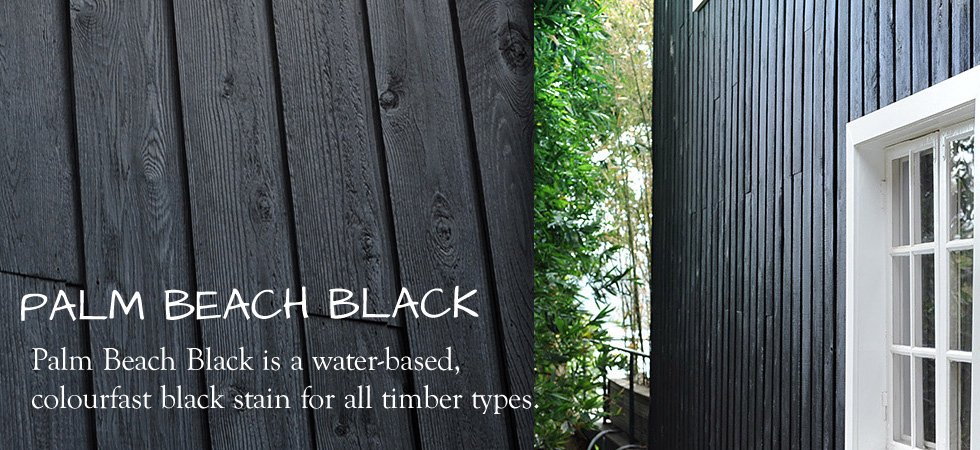
Almost a decade ago, we fell in love with an idea. A client wanted their teak outdoor dining table finished in Porters Palm Beach Black — that deep, matte, almost-velvet black you see in design magazines. We loved the vision. The customer loved the vision. The result, on day one, was stunning. Three years later, the table told a different story. This is what we learned, what we did to fix it, and what we now recommend for anyone chasing a true black finish on outdoor teak furniture in Australia.

The Dream: Porters Palm Beach Black on a Teak Dining Table
Porters Paints make beautiful decorative finishes. Palm Beach Black has a depth and sophistication that few products can match — but it's a decorative interior/wall paint, not an exterior horizontal-surface finish. The manufacturer specifically doesn't recommend it for flat surfaces exposed to weather. We knew this going in. We tried it anyway, because the look was so compelling. Lesson learned in real time.
What Three Australian Summers Did to It
Flat horizontal surfaces are the brutal end of any exterior finish. They cop: Direct UV all day, breaking down binders and pigments Standing water from rain and condensation Thermal cycling — expansion and contraction with day/night temperature swings Physical wear from plates, glasses, vases, hands, elbows Decorative paints aren't engineered for that combination. After three Sydney summers the finish was peeling, lifting at the edges, and crackled across the surface where the teak's natural oils had pushed back. The good news: teak is forgiving. A failed finish doesn't mean a failed piece of furniture. It means a stripping job and a fresh start.
The Restoration: From Peeling Paint to True Black That Lasts
Here's the process we used to bring the table back, and the one we'd recommend now for anyone chasing the same look:
1. Strip the Old Finish Completely
Every flake of failing paint has to go. Scraping, sanding, sometimes chemical stripping for stubborn areas. Patience matters here — leftover old finish telegraphs through new coats and creates weak adhesion points.
2. Sand to a Uniform Surface
We worked the table back with 120 grit to level the surface and expose clean timber. Coarser grits leave scratches that show through dark finishes; finer grits don't give the new finish enough tooth to grip. 120 is the sweet spot for teak under a pigmented oil system.

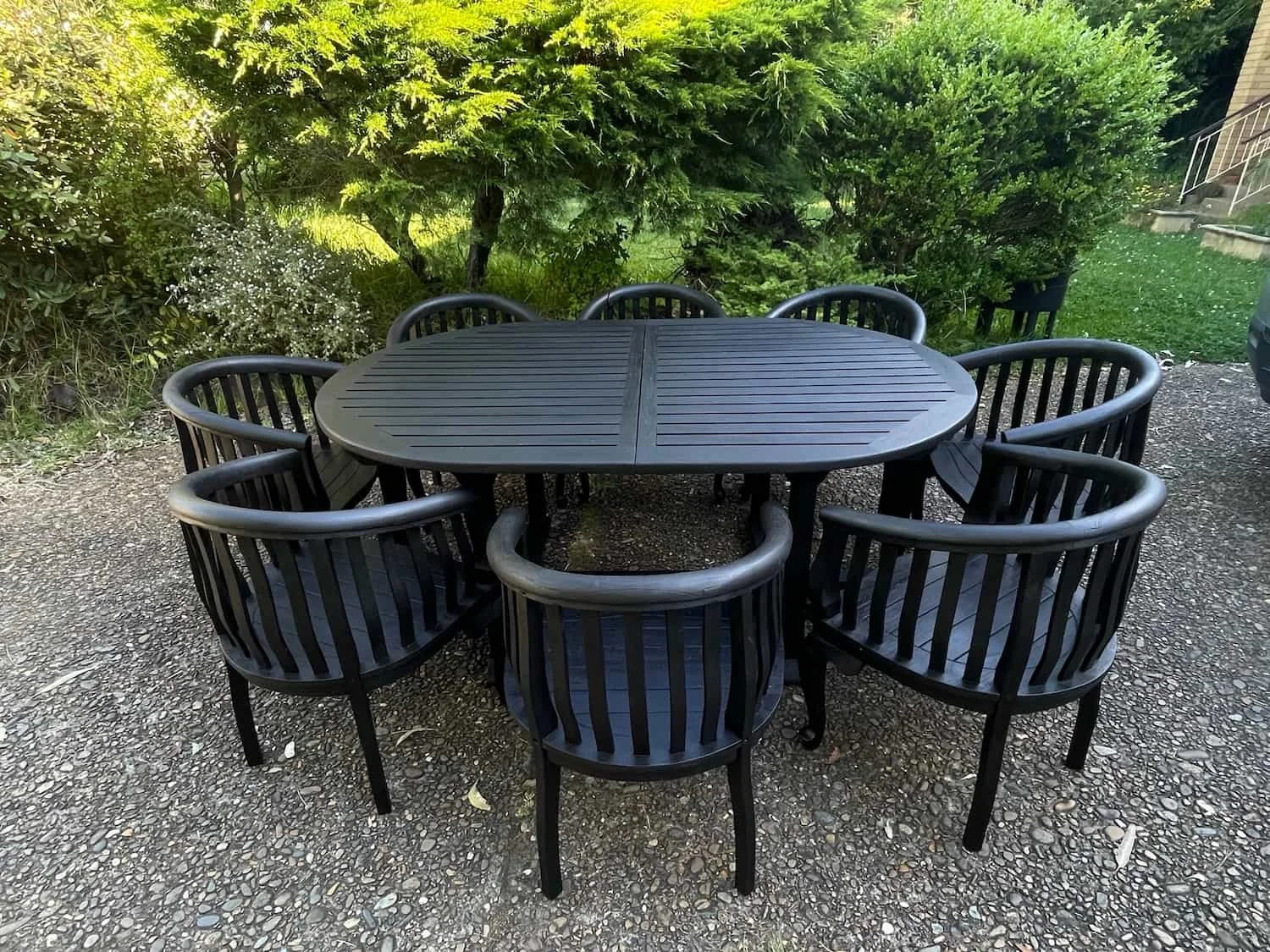
The finished result at the customers house.
3. Apply Rubio Monocoat Sunprimer HWP in Black
Sunprimer HWP is Rubio Monocoat's primer specifically designed for exterior hardwoods. It penetrates the timber, locks pigment deep in the grain, and creates the foundation for a finish that won't peel — because there's no film sitting on top. The colour is in the wood, not on it.
4. Top Coat with Rubio Monocoat Hybrid Wood Protector in Black
The Hybrid Wood Protector layers over the Sunprimer to deepen the colour and add UV and water protection. Two thin coats, applied along the grain, buffed off properly between coats.
Alternative: Rubio Monocoat Durogrit in Black
For projects that need maximum durability — think high-traffic decks, public spaces, or outdoor furniture that takes a beating — Rubio Monocoat Durogrit is the heavier-duty option in the Rubio exterior range. It's tougher than the Hybrid Wood Protector and built for surfaces that need to withstand serious wear. The trade-off: straight from the tin, Durogrit Black gives a very painted, opaque look. It sits closer to "black paint" than "black teak" in appearance — beautiful in its own right, but a different aesthetic to the penetrating finish above. The professional fix: dilute Durogrit Black with 20% water before application. This thins the product enough to let more of the timber's character show through while keeping the durability advantage. You'll see the grain. You'll get the depth. You'll keep the toughness. It's a technique you won't find on the label — it comes from years of using the product on actual jobs. Which system to choose? Sunprimer HWP + Hybrid Wood Protector — for furniture and surfaces where you want the true timber-grain character with deep black colour. The classic Förnya recommendation for dining tables, lounge settings, and feature pieces. Durogrit Black (diluted 20% water) — for high-wear applications where you need maximum durability and can accept a slightly more uniform colour finish. Both are legitimate routes to a stunning, long-lasting black finish on teak. The right answer depends on the piece, the use, and the look you're chasing.
Penetrating Finishes vs Film Finishes: Why It Matters
A film-forming paint sits on top of the timber and eventually fails because timber moves and paint doesn't. A penetrating oil system like Rubio Monocoat bonds with the timber and moves with it. That's why one peels and the other doesn't. This is the single most important principle in outdoor timber finishing, and the one most often ignored by homeowners reaching for whatever black tin is at the hardware store.

How to Get True Black Teak Furniture That Lasts
The short version, for anyone planning this finish on their own outdoor furniture: Don't use decorative wall paints on horizontal exterior surfaces. Beautiful, but wrong tool for the job. Use penetrating systems, not film finishes. Rubio Monocoat Sunprimer HWP + Hybrid Wood Protector is our go-to for furniture. Rubio Durogrit (diluted 20% water) is the heavy-duty alternative for high-wear surfaces. Prep is 80% of the result. Stripping and sanding properly is the difference between a finish that lasts five years and one that fails in eighteen months. Maintain it. Even the best exterior finish needs a refresh coat every 12-24 months in the Australian sun. Build it into your seasonal rhythm. Read our full guide to preparing outdoor furniture before staining or oiling →

Prefer to Hand It to the Specialists?
Förnya restores premium outdoor furniture across Sydney, Brisbane, the Gold Coast, and the Sunshine Coast. Teak is our craft — we work with the same finish systems used by the world's best outdoor brands, and we've spent years learning what holds up to the Australian climate and what doesn't. If you have a teak setting that's tired, peeling, weathered, or simply due for a colour change, we'd love to take a look. Request a quote
→Browse more restoration stories on the Förnya journal →
Par Arnoldson is the founder of Förnya, a premium timber restoration and preservation business specialising in the Swedish art of keeping outdoor furniture beautiful, season after season.
It is a massive job and will cost a few dollars but once done it looks absolutely amazing. Contact us for a quote today.
If you want to see more of our restorations, head to our facebook page here:
Par Arnoldson, the founder of Fornya, is a Teak Maintenance Specialist based in Sydney, Australia.